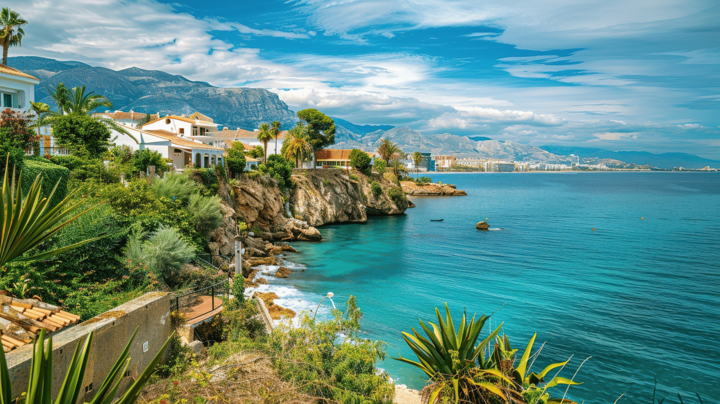
As a local real estate agency on the Costa del Sol, Marco Property Service has decades of firsthand knowledge of this area. In this guide, we leverage our expertise to answer common questions about the Costa del Sol – from where it is and what there is to do, to details on the climate and practical tips for visitors.
Where Is the Costa del Sol?
The Costa del Sol (Spanish for “Coast of the Sun”) is a coastal region in the far south of Spain, along the Mediterranean shore of Andalusia. It mostly falls within Málaga province, extending approximately 150 km from the town of La Línea de la Concepción (near Gibraltar) in the west to Nerja in the east. This sunny coast is part of the autonomous community of Andalusia and even includes a small section of Cádiz province at its western edge.
Geographically, the Costa del Sol lies between two other Andalusian coasts: it borders the Costa de la Luz (to the west, on the Atlantic side) and the Costa Tropical (to the east, in Granada province). The region is backed by mountain ranges that shelter it from northern weather, contributing to its famed pleasant climate.
Key locations: The Costa del Sol encompasses a string of towns and cities along the Mediterranean. Some of the most notable places include:
- Málaga – The largest city on the Costa del Sol and a cultural hub, with a major international airport (Málaga–Costa del Sol Airport).
- Marbella – A glamorous resort city about 50 km southwest of Málaga, known for its beaches and luxury marina (Puerto Banús).
- Estepona – A charming seaside town in the western Costa del Sol that retains more of a traditional Spanish feel.
- Benalmádena, Fuengirola, Torremolinos – Lively resort towns west of Málaga, popular for their beaches and family attractions.
- Nerja – A picturesque town on the eastern end of the Costa del Sol, famous for its cliffside Balcón de Europa viewpoint and nearby caves.
- Manilva – A small town at the far southwestern end of Málaga province (bordering Cádiz); essentially the western limit of the Costa del Sol.
In summary, the Costa del Sol is located on the southern Mediterranean coast of Spain, centered on Málaga. It is not a single city, but a region comprising many coastal communities. Formerly a series of quaint fishing villages, today the Costa del Sol is a world-renowned tourist destination that draws visitors for its sunshine, beaches, and vibrant towns.
What to Do in the Costa del Sol
There is no shortage of things to do and see on the Costa del Sol. This region earned its fame as a vacation paradise, so it caters to a wide variety of interests – whether you’re seeking relaxation, culture, family fun, or outdoor adventures. Here are some highlights:
- Enjoy the Beaches: As its name suggests, the “Coast of the Sun” is famous for beaches. You can sunbathe or swim at popular sandy stretches like Marbella’s Fontanilla Beach, La Malagueta in Málaga, or Burriana Beach in Nerja. With over 150 km of coastline, there are both bustling resort beaches and quieter coves to discover.
- Explore Charming Towns: Wander the old town of Marbella (casco antiguo) with its whitewashed alleys and orange tree–lined plazas, or visit Mijas Pueblo, a postcard-perfect white village perched in the hills. Málaga city offers a blend of historic sites (like the Alcazaba fortress and Roman theater) and modern attractions (such as the Picasso Museum, since Picasso was born in Málaga). These towns provide a taste of Andalusian culture, cuisine, and architecture.
- Visit Landmarks & Attractions: Notable sights include Balcón de Europa in Nerja (a cliffside promenade with panoramic sea views) and Puerto Banús in Marbella (a luxury marina filled with yachts, designer boutiques, and vibrant nightlife). Families can find fun at places like Selwo Aventura (a safari park in Estepona), Bioparc Fuengirola (an innovative zoo), or water parks like Aqualand Torremolinos. History enthusiasts might take a day trip to the stunning Alhambra in Granada (just outside the Costa del Sol) or the mountaintop village of Ronda inland.
- Golf and Outdoor Activities: The Costa del Sol is often nicknamed the “Costa del Golf” – and for good reason. There are over 70 golf courses here, the highest concentration in Europe. Golfers flock to famous courses such as Valderrama (often ranked the best in Europe) and many others around Marbella, Estepona, and beyond. Beyond golf, the region’s mild climate makes it ideal for year-round outdoor activities. You can hike in the nearby Sierra de las Nieves or Montes de Málaga natural parks, go biking along coastal paths, enjoy water sports (sailing, kitesurfing, paddle-boarding), or even ski in winter at the Sierra Nevada (a few hours’ drive away).
- Dining and Nightlife: The Costa del Sol offers a thriving culinary scene. Enjoy fresh seafood (don’t miss the grilled sardines or espeto skewers, a local specialty) at chiringuitos (beach bars), or savor traditional tapas in village squares. Being a cosmopolitan hotspot, the area also boasts international cuisine and fine dining (including Michelin-starred restaurants in Marbella). After dark, towns like Marbella and Puerto Banús are known for upscale bars and nightclubs, whereas Benalmádena and Torremolinos have more casual beachfront bars and British-style pubs. There’s something for every taste, from quiet wine bars to lively nightclubs that go till dawn.
In short, what to do on the Costa del Sol comes down to your preference – relaxing on sun-drenched beaches, exploring cultural sites, indulging in sports and leisure, or enjoying food and festivities. The variety is a big part of what makes this region so appealing. Marco Property Service has been helping clients discover these local attractions for years, so we can assure you there’s always something new to experience on the Costa del Sol.
Climate and Weather in the Costa del Sol
One of the biggest draws of the Costa del Sol is its fantastic climate. This coast enjoys a classic Mediterranean climate with mild winters and hot, dry summers, all moderated by the proximity of the sea and protective mountains inland. Here are some key points about the weather: